19th October 2026
Sanctuary Supported Living
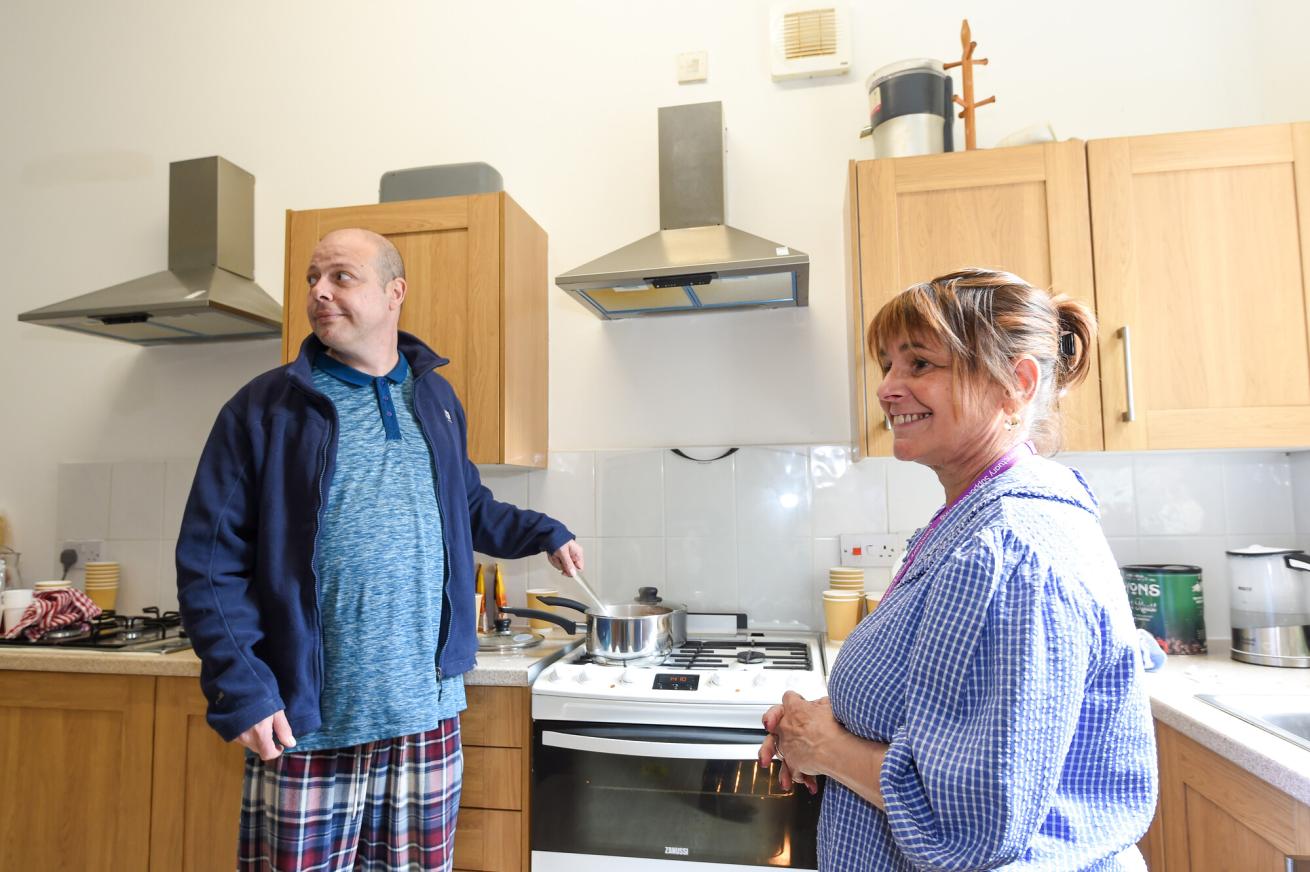
Learning new skills has been an important part of Billy's pathway for independence.
Every step matters on Billy's pathway for independence
When Billy moved into Sanctuary Supported Living's Alexandra Road, a supported housing service for adults with mental health needs, low mood and social anxiety meant he often remained in his room and found it difficult to engage consistently with support
He was struggling with his mental health following a period of unstable housing, leaving him feeling uncertain about the future and overwhelmed by everyday life. He was also experiencing challenges relating to substance misuse and needed regular prompting with household tasks, appointments and managing his tenancy.
How can supported housing help when someone is struggling with their mental health?
From the outset, the Alexandra Road team focused on helping Billy make progress at a pace that felt manageable. They recognised that building confidence would take time and worked with him to identify the areas that mattered to his independence, from establishing a daily routine and looking after his home and personal wellbeing, to understanding his responsibilities as a tenant and managing his finances.
In the last six months, Billy has worked steadily towards these goals and became more comfortable engaging with support. As his confidence grew, the team adapted their approach to encourage greater independence, with Billy taking more responsibility for decision-making and day-to-day life.
What skills can people develop through supported housing?
Billy now maintains his own living space, completes his laundry regularly, manages his personal care without prompting and prepares simple meals. He is keeping up with his physical health appointments and taking a more active role in shaping his future, contributing to conversations about his goals and the steps he can take to achieve them.
Alongside these practical achievements, there has been a noticeable change in how Billy approaches everyday life. Rather than withdrawing when things feel difficult, he is increasingly able to make decisions, work through problems and recognise when he would benefit from asking for support.
How can supported housing help reduce social isolation?
Feeling more settled has also enabled him to reconnect with the wider community. Having previously experienced social isolation, he now takes part in local activities and social groups, giving him opportunities to build new connections and spend more time around others.
Importantly, Billy has continued to maintain his tenancy successfully throughout this period. He is proud of his home, has positive relationships with staff and neighbours and is becoming more capable of managing his utility and financial responsibilities.
What difference can supported housing make?
For Billy, supported housing has provided the opportunity to rebuild his life one step at a time, and while he has come a long way over the last six months, he remains focused on what comes next. From managing money with greater confidence to exploring volunteering or learning opportunities, each goal plays an important role in helping him shape his next chapter and continue building on everything he has achieved so far.
Billy said: "The support I've received from Sanctuary Supported Living has made a real difference to my life. I'm thankful for everything the team has done for me and I'm excited about the possibility of one day having my own place and living independently."
"The support I've received from Sanctuary Supported Living has made a real difference to my life."